Correspondences
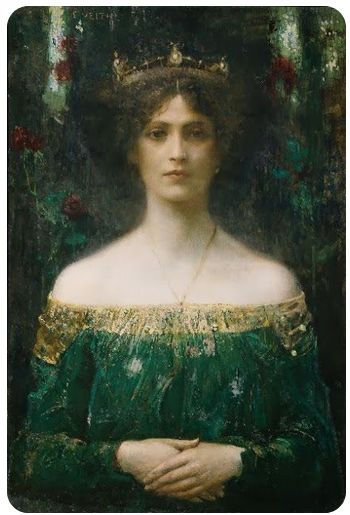
Firstly – in many ways, the King overlaps heavily with the Solar – he is the gate through which the Solar passes, by whose success or failure the Solar manifests. I’ve tried to focus on King specifically here, rather than Solar more broadly.
-
Stability & community
- Permanence, peace
- Tradition, establishing a lineage or tradition
- Stagnation, decay, exhaustion, worn-out/outdated traditions
-
Being part of a system
(community, family, social structure, convention, tradition)- being part of a community
- loyalty and friendship, having a band of fellows
- interrelation with a group of others
- knowing your place, be that comforting or oppressive, in a wider structure
- self-sacrifice for the greater good, doing your duty
-
Law and order
- maintaining stability, maintaining a peace, maintaining a traditional way
- the concept of a State/state power, a Nation, a Tribe, and so forth
- Establishment forces: monarchy, the law, the church, the army, schooling, institutional forces (i.e. the British Museum, the BBC)
Human life and mortality
- Things related to the lives, customs, and kingdoms of mortals/humans
- The experience of maturing and aging
- Family, family relationships, being a parent or child
-
Civilisation
- Constructing something permanent (a building, a tradition)
- Doing activities which can only occur at times of plenty and peace (for example, starting a family, focusing on artwork)
- Making peace (between individuals, opposing views, rival nations)
- Cities, villages, human outposts, farms
- Animal husbandry – particularly horsemanship
- Agriculture, especially crop-rearing and the wheat
-
Man and nature
- Man safe from nature’s wildness and chaos
- Man in a truce with nature, both their needs being met through a process of careful negotiation
- Man as master of nature, set apart and above it
- Land as a friend to man – the bounty of the natural world, and us using that without wrecking it.
Things to Do
- volunteer with food charities, or charities associated with home and shelter
- learn from an elder, or teach, a young person to cook; cooking and eating as communal activities
- Attend to your responsibilities (as a community-member, family-member, in your work)
- Cultivate qualities of duty, personal responsibility, leadership, personal competence,
- Getting your personal affairs in order – exercise, health, a house, career – especially if you have dependents.
- Plan for the future
- Horse-riding, dog-training
- Establishing something permanent for your community
Beasts & Plants
The horse – he is “Master of Horses”. Probably also the dog, but it is not uncommon to see i.e. a Lion. All sorts of figures that humanity, and especially Kings, have used to represent themselves – their power, or their dominance over nature.
For plants, the oak tree of course, as well as wheat.
Names
beama beorhtost - brightest of beams, in the sense of both timber and shafts of light.
The hlafmasse, loaf mass has the same origins as 'lord' and 'ladt' in hlafweard - bread guardian - and hlaefdige - bread kneader.
Colours
His standard image is green and gold.
- The fading king: white and brown
- the corn: gold, sandstone, and orange-browns
- with retinue: adding warm reds and browns
- with Landmother: gold vs grey
- The young king: more of a white-green or blue-green
- The hunter: that, but with black
- The warrior king: brassier golds, red and black
- The Winter King: autumnal colours
Note the hunter and the young king are both open to outer elements and influences in their colouring
Image
The king is usually imagined in saxon/celtic/medieval/dark ages fantasy wear – a tunic and a cloak, in greens and browns. He wears a golden crown. He bears a wooden shield, sometimes a staff, but rarely/never a sword. He is of mature age, and sits on a throne or horse, often surrounded by loyal retainers; in a hall, or building walls.
It goes without saying that the king needn’t be gendered in a particular way, nor made part of an imagined mono-cultural caucasian past; and it is good for you to self-consciously seek alternative images of the King.
Places
At the head of his hall, surrounded by companions – however you wish to imagine that hall. Solar landscapes. Or in villages and cities, which we normally envisage as brown wood or yellow stone, or among the domesticated fields.
Churches
The Sun King’s pastoral focus and link to the State means little village churches and certain hymns, and the whole institution of polite English anglican vicars riding bicycles in and out of Agatha Christie books are under the Sun King. Typically, we can use churches and their grounds as landscape locations for Sun King rites, syncretising ideas of God, Jesus and Heaven onto the Sun King and the promise of a peaceful land.
Note that this imagery is ubiquitous as the background to the the 70s counter-culture sources I’m drawing from – often there as a counterpoint to dissonant, unorthodox and challenging behaviour. (Penda’s Fen; the Wall; The Wicker Man; etc) You do not have to include the Church in your Fencraft. That said, it feels inherently part of our Landweird now, and is an idea which ought to be represented within the system; and it is intertwined in Beowulf and Robin Hood and Middle Earth, and with Celtic tradition and Ceremonial paths. It is not possible, I think, to create a faith of this Land which does not have the Lord in it.
Weathers
The king himself is not exactly the sun. He is more like the end result of processes the sun (and absence of bad weather) permits. Hence while the solstices and apexes of the day (dawn, midday, sunset) certainly have Sun King affinities and can be used for his work, his weather is more of an overall warm pleasant day, sunny but not too hot, in the morning or the afternoon.
Materials & Symbols
Wood and stone. To a lesser extent, anything manufactured by man (metal tends Solar-Lunar, and textiles Lunar-Stellar, for mythic reasons), and everything an earthiness, a physicality. ᚠ - the alchemical symbol for things of land transformed by dryness and human processing, such as pottery, tools or timber.
Circles, such as the round table, the stones at Avebury, a hillfort, a shield, or friends around a picnic basket; as well as the sun’s cycles, naturally.
Food and Drink
The Sun King is THE food spirit, so in a sense any food is good. But particularly, bread for he is related to the wheat; or food in large quantities, with enough to share (c.f. every time they sit down to eat in Wind in the Willows).
A classic choice is your traditional, communal meal: this might be a Sunday roast, but for others this might be a curry. Something your grandma taught you, or a food associated with your heritage (Welsh cakes, haggis, gâche etc) is also a fit for the connecting with where you came from.
One of the best ways to approach the Sun King is by helping with food banks, if your community is so neglected by human kings and powers as to need one.
Affinities
The ancestors and Guardians. Religion – but no magic - and particularly when the head of state provides the link between a mortal world and religious access. He often appears with loyal retainers – knights of the round table, a band of loyal nobles and councillers, his family, and so forth
The Sun King is part of an important mythic cycle with the Landmother, referring to the interplay of sun and weather permitting the crops to grow. He is also often depicted in alliance or in tension with a Lightbringer, referring to the Sun's support in reviving the crops and its autumn betrayal in destroying it, and to the tension between renewal and tradition. The Sun King's alternative form, the Winter King is often perceived as a brother, emphasising their like-and-unlikeness.
Domains
The King is Solar, with aspects trending Sol-SolStel and Sol-SolLun
☉✺ – Man’s relationship with nature.
The King usually represents formal civilisation, with the balance in favour a little more certainly in that of man, with nature tamed and safe for our enjoyment. Trending SolStel represents a younger king, a hunter, a balance of nature and man where nature is more fully flourishing and man is equal among an ecosystem. Trending Sol moves towards the idea of man as both special and separate from the natural world, perhaps the Biblical Adam where we are additionally set above and ruling it.
Man and the Nastural World. Changing Attitudes in England 1500-1800 by Keith Thomas is an absolute banger of a book, bringing together a clutter of clippings into a history of how one human culture has thought about nature over time. One of those books where you learn something on every page. It is in particular a history of us learning to care about the natural world, and its descriptions of how people hated and feared anything natural are perfect for a Solar worldview: needing brambles cut back and new ordered gardens planted.
☉☽ – the Mortal World.
The King and the Sun are the world of men, with the Lunar having the attribution of the artificial. So between these two points are phenomena where the natural and otherworldly is entirely excluded. An example would be the King as maker of civilisation and the mortal world, but trending into Sol-SolLun when we think of heavy industry and any parts of mortal life which we may think takes us a little too far from nature. Another example would be the King as the Law, the enforcer of handed-down traditions; but ☉-☉☽ contains the more abstract, and impassioned, concept of justice. It’s for this reason that the SL (mortal, but outside the King’s domain), we see most active challenges to the King: Robin Hood, Lucifer, and the general concept of rebellion and revolution.
The Sun King is the ancestors and written tradition. This is a curiouslty firm grasp on memory and the past, as opposed to the StellarStellar, which is the pleasing distortion of facts within the Landweird. The Sun King is a kind of benevolent certainty. It may well be wrong, but it feels good so we’ll go with it. Contrast also the Wanderer, who is seeking a peace he has not yet found. In the other direction, tending Solar-Lunar is the rigour of written history, of writing and libraries – it is the discerning sword that destroys illusions; the benevolent certainty of the Sun’s idealised memories and fixed traditions of itself exposed to the light, and burned in favour of truth.
Generally, when a king is influenced by a second Domain, he is at risk of falling, being no longer bound to the duty of his role, as described in the previous article.
There is additionally a form of the King who is predominantly facing inwards, at his hall and warrior band, suggesting a religious life around the state and human relationships.

Spirits
Arthur, of course – especially the myth of the once and future king. My vision of the Sun King is unambiguously inspired by Boorman’s Excalibur (1981).
Good King Richard/Bad King John in the Robin Hood cycle. Our Robin Hood of choice is Robin of Sherwood (1984-6), however this is more of an inverted king adaptation, showing what happens when the King goes awry and a Lightbringer must challenge him. And that series makes the excellent choice of believing no king is ever good
Aragorn could be SolLun – he is both elf and man, and has the qualities of a Wanderer as well as a Returning-King - or SolStel, associated with the wild. But especially in the books, and archetypally, we usually think of him as a Sun King. Theoden is another Sun King, and in the films more of a King Under the Holly – because he desires protection and retreat over boldness and attack. But the most iconic Middle Earth Sun Kings are, truly, the Hobbits and the Shire – especially Samwise Gamgee, who is later the mayor of the Shire. Boromir and Faramir form a sun-and-moon pair, between which a good king could have been formed.
In folklore, we associate the Sun King with John Barleycorn songs and associated harvest lore.
In terms of anti-lore, Game of Thrones is very worth watching or reading; a story of fallen, dead and inadequate kings; the reason why our forebears, held the image of the perfect king so dearly.
For Vikings, the saying 'rich as Njord' communicated his role as fertility of the sea, increase of possessions, peace and so forth. Njord was sunited with Skadi, the cold and dark goddess of winter and the mountains who skis - i.e. we are in the marriage of the Sun King to the Landmother territory, and due to Njord's watery attributions he could be understood as a coastal variant (master of the bounty of the sea, rather than human commerce or agriculture; master of winds and weather because that allows one to get food from the sea safely); or as some kind of merged god embodying the SK/LM union. There’s another myth in which Njord the Sea marries Nerthus the Land, which would be another SK/LM pairing albeit one which is a little mixed up. Njord definitely embodies this myth.
- Hrothgar - Beowulf
- Scyld (shield)/Sceaf (shief)
- Beow/Barley/ John Barleycorn
- Njord
- Any figure in a King of the Pantheon role (Odin, Jupiter, etc)
- the heroic establishing ancestor of a human community
- Father Christmas
- Aslan
- God, the Father - Christianity
- King Arthur
- Good King Richard/Bad King John - Robin Hood mythos
- Sam Gamgee, Aragorn, Theoden - Lord of the Rings
Music
No specific sounds; my playlist is a bit of a hodgepodge. I’ve got themes from Rohan in Lord of the Rings, and from Excalibur; “Jerusalem”, obviously, as it is usually used as the King’s musical representative in film. The organic sounds of violin and brass, evoking both the wood and metal of worked materials, as well as the institutional/traditional culture represented by the orchestra. Folk music also creeps onto my Solar playlists, but less so those for the King, but John Barleycorn is his song at the right time of year.
One idea I wish to introduce is – and this is a lot! – is the Haunted Generation/Mark Fisher exploration, of a lost era in which the government was patrician and saw its role as caring for the people (typically, the post-war 1950s-70s period) in contrast with the 1980s-now, of every-man-for-himself, competitive, deregulated individualism. Fisher (and others) see a current of nostalgia and longing in art, relating to this lost time, our current state, and the impossibility or question of how such a time might be regained in future. Patrician voices are both cosy and sinister; projects like Welcome to Scarfolk, with its slightly unsettling local council posters; an interest in State-sponsored avant garde weirdness in the public sphere (i.e. Radiophonic Workshop); hauntological music, like Mordant Music’s Dead Air, woven-through with the voice of a veteran announcer suggesting a parallel universe broadcast transmitting from an unknown time and place; and so forth. I see these artworks as uncontrovertably Stellar; but they hark to a time in the sun that now exists only in memory. They speak, in our language, to the absence of the Sun King: the absence of a caring state that supports and cares as a parent would, a force both at once reassuring and repressive.