the Landmother
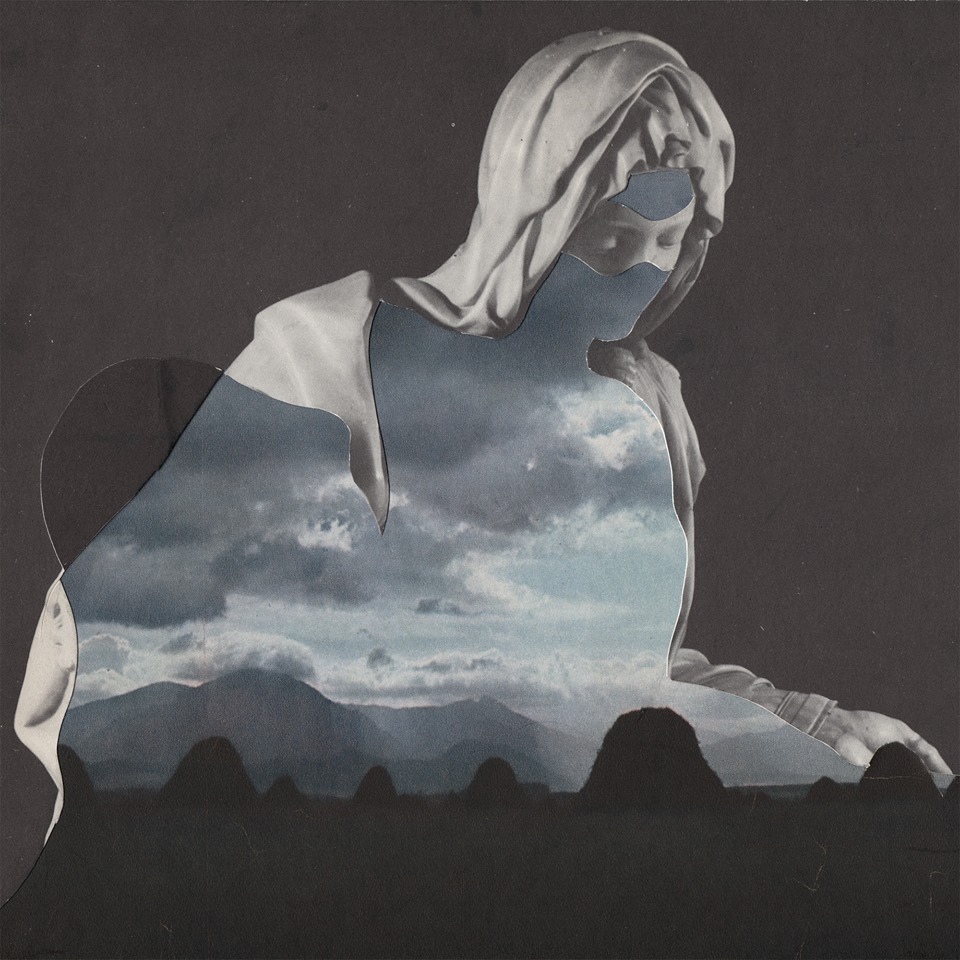
Among the largest, strangest, and most important spirits is the Landmother.
DELAY
The delay in finishing this article is twofold. The first is a desire to write some poetry or a prose-poem about her, instead of baldly written text; because really, much of the problems of contemporary Paganism stem from this almanaical approach. We encounter the Gods as encyclopaedic entries, rather than as mystery, and it can be hard to then imagine them as something moving and alive after such a treatment. But my creative writing is passable at best, and I would not like to give the false impression that my texts are ancient, nor use the faith as a vehicle to make novices read the Grand Poobah’s awful poetry.
The second is Her mutability. She is both Lunar and Stellar, perhaps the hardest position on the Map to fix. As Lunar, She is a creature who is independent and alive – not a stock figure bound to a mythic cycle – but someone we can treat with on person-to-person terms, if not quite human-to-human. And as Stellar, She is mutable, unfixed, boundless, timeless and strange, more presence than person, a series of shifting moods and perceptions – the weight of a storm-sky on the land – a thing that must be constantly interpreted and sought. This combination does not make for clarity, and in a sense this is good: the sort of perpetual strangeness we celebrate in Fencraft.
More than any other spirit, She seems to move in and out of other goddesses, absorbing them and fragmenting away again. This is, perhaps, the legacy of figures like Mary and the Goddess in traditional paganism, where we are primed to look for a single overarching figure who encompasses all these roles. At the same time, her myth seems fully absent from the record (something that continues to surprise me)
As you read, remember that her Solar aspect – as goddess and ancestor-queen – is extremely dominant in the Old Religion: we have always had a preference for spirits who are safe and benevolent towards us. But that is the form in which she has been bound to man’s usefulness and need. She has many other, and far mightier faces than this. Use her Solar myths to move towards a fuller understanding, a start-point.
Overview
The Landmother is attested in history, incorrectly translated as mater terrae, “Mother Earth” – which gives the idea that she is some kind of land or agricultural spirit. And indeed, she an agricultural function – but as the clouds and rains, rather than as a fertile belly.
What visions of the Landmother have in common are:
- First, a Power related to the Sky – specifically the weather.
- Secondly, a Lunar-Stellar spirit, which means we approach her in a state of supplication and hope
- Thirdly, a bridge between mortals and the Stellar – through her we may access powers that mortals may not commonly control
- Fourthly, as a Lunar-Stellar creature, she is strangeness and hard to pin, her motivations often veiled to us or uncertain.
- Fifthly, she expresses the Lunar-Stellar quality: a dreadful bargain.
And as ever within Fencraft, we encounter her in three ways – as a mighty Goddess, as a changeable Fairy, and as a formless Presence. This is especially important for the Landmother, because she has a “full” mythos in each of these positions – unlike some spirits, who are almost certainly an ancestor-god or fairy and for whom imagining them in other ways is somewhat forced or fanciful, She is immense in each strand.

Myth
The myth of the Landmother is as follows.
(This story may be understood as that of the Solar, goddess or mythic Landmother; one in which She is celebrated for having been trapped or bound into a cyclical pattern which favours man. It is extremely important to understand the Lunar or Stellar Landmother is just as dominant in our experience, and quite separate from the Solar figure; She is perhaps the most massive of our spirits.)
Man is hungry and in peril. The young king leaves the Village and seeks a fairy bride, wooing her with skill or with threats, loving her or trapping her, or striking a terrible bargain. He is of Man and the Land, and she is of the Sky and the Otherworlds (we need not trouble ourself to ask if she is a Fairy or a Goddess or an Alien or an Elf, for all these concepts are understood in Fencraft as the Lunar to the Sun King’s Solar.)
She is his, for a season – but all promises must be paid for.
The most classic form of the myth is the Sun King marrying the Landmother, that she might roll back the clouds in sunshine and also bring the needed rains. But we also know stories of the Winter King petitioning the Witch of Winter to preserve us in the snows, and seafarers trapping Calypso in a mortal fana that they might rule the waves. Perhaps she is a Goddess, or perhaps a Fairy spirit, depending on your taste.
In the end, the price must be paid. The death of the King, her beloved – or the death of the King, her captor – brings an end to the peaceable weather of summer. And so we see She Who Weeps, who cannot stop lamenting; or rage, such as the rage of Demeter or Calypso, which brings peril to the sea and lays waste to the crops. The wheel turns, and She is once again an untamed thing of the winter wilds, overcast and unbound, until the Springtime.
Beira and Bride
I began thinking about the Landmother after looking into annual cycles, with the idea that Fencraft would not have a single (and rather strained) myth of a god and a goddess, but multiple overlapping ones. Beira, and Calliach – the veiled ones – are “winter goddesses”, who give way at Imbolc to the spring. I initially thought of this as a dual-pair of goddessess, mirroring one another, with the bride of summer as a different sort of spirit. But over time, I have had a greater sense of her winter characteristics being her core characteristics all year around – but in summer they are moderated, tempered, controlled – and in winter, they are not. If the two spirits are seperate, if there is this Landmother in the summer and a different Winter Queen in November – then they are of a very similar temperament and power-base.
Initially, my conception was of a love story – a marriage between a mortal and an elf – but since developing my thinking to notice that really, truly, the times of year when the Landmother is most felt is a wet November, I’ve encountered these other interpretations of her marriage to the Sun King. An uneasy truce driven by political pragmatism, which may account for the Landmother’s stern and focused mien; or a kidnapping and imprisonment – or a combination. I think all of these work, mythically and religiously, and it is a good response to the uncertainty of the Lunar and the impassiveness of the Stellar, that what the King does in seeking her is potentially very dangerous and not at all predictable or under his control.
The nature of creatures which are Lunar is “friend or not friend?”, creatures which are humanlike – who can be spoken to and bargained with – but are fundamentally Other, somehow, and in frightening ways; the nature of Lunar myths is fairy tales, of ordinary little villages trying to live alongside the strangers all around them.

Themes
We see many themes within the myth of the Landmother and the King:
- Ambivalence, to a high degree. This is not a spirit who loves man automatically, or at all, combining Lunar and Stellar themes to this effect – the amoral independence of non-human creatures, and the mighty untamed wild.
- Permission/denial. The Landmother is paradoxically associated with many things She is not the ruler of:
-
She is not a grain goddess, but it is by Her mercy the sun and rain allow the crops to grow
-
She is not part of civilisation, but permits or lays waste to it on Her own whim
-
She is not a spirit of the light, but by Her rolling back and rolling in of clouds, controls what light we have
-
She is not a sea goddess, but without Her no man may test the waves.
-
There may therefore be a magical role for Her a path-maker and path-blocker, an opener of ways; or as first-goddess who must always be called on, for permission that the other magics may flow
-
- Truce. one of Her Stellar themes is that man’s survival is a temporary blessing, something claimed or carved out on uncertain ground. And we can see ambivalence too in the story about what this means – is this a romantic tale, of two opposites working together in harmony, or a violent one, in which man can only survive by dominating the other creatures in his land?
- Geas, fate, doom: she obeys fairy-logic, becoming bound when it is right to be so, but enforcing fate in her turn – willingly or not.
- Acceptance, humbling, supplication before a mightier power – expressed by the changeability of the weather, but also for example, against the inorexable power of fate; judgement and consequences within the choices that have been made; and the powerlessness of man against the natural world. The grieving goddess guides us through the bitterness of acceptance, through recognising the hard limits of this life and world.
- the Lunar. As a Lunar spirit, Her story expresses many Lunar themes. Willpower and independence (to resist courtship, to step outside, to refuse benevolence to man as is Her whim) and the breaking of bonds (she does not fit easily into the role of consort-queen)
And mythically:
- A mortal takes a fairy bride. Several of my books state this is a “common” theme in Irish lore; if it is so, then I am struggling to find much evidence of it. Like much of Fencraft, it seems like something that ought to exist. But we have some examples of it – the Lady of Llyn y Fach Fan, possibly stories of selkies and swan wives and Melusine, and the triad of tales of Beren and Luthien, Earendil and Elwing, and Aragorn and Arwen (or even, Thingol and Melian).
- An impossible marriage price. We look at songs like Scarborough Fayre and the story of Beren and Luthien or Culwch and Olwen, in which a lover seeks their partner and is set impossible tasks to win them.
- Ambivalent women in the waters. Now this is a very prominent figure; and not all of them are Landmothers, but our archeological finds are very focused around a power in the waterways, the lakes and streams and springs, and in our myths and fairy tales she appears too, often appearing to offer unexpected help. The Lady of the Lake is perhaps the best-known of them.
- The Washers at the Ford. A key Landmother experience. Les Lavandieres, Nigheag na h-ath, bean nighe/ban nigheachain – spirits in the waters who are associated with cloth, and who have some insight into death – they appear washing the blooded sheets and shrouds when death is near. Related, perhaps, for our purposes are grieving goddesses in the winds. Best known is the banshee, but there is also the caoineag/caointeach in Scotland; the initial vision of it for me was She Who Weeps, a woman walking on the shore alone in grey robes whipped by the wind, grieving the loss of her lover at harvest. All these figures have slightly different mythologies, but what they come together to represent to me is the way that the Landmother is not a death goddess, precicely, but she has an insight into death, into necessity, and is part of the process of death and of funeral customs. This matches up with her other attributes above where she is a gatekeeper – she is not death, or fate, or the harvest, or safety behind walls, but it is only by her mercy these are made possible.
- A queen from a foreign land. Our history is filled with political marriages, where an outsider is made queen, and is a newcomer to the culture she sits at the head of. My notes read that there is an interpretation of Rhiannon as a goddess whose marriage to a mortal legitimises his kingship.
- The Powers teach man how to survive. the Lady of Llyn y Fan Fach brings cattle as a bride-price. Many other cultures have otherworld figures who taught man how to hunt or fish (the only one I can think of now is Maui, who I know mostly from Moana, and who I would consider more of a Lightbringer) . Some Landmother myths show her role as greater than merely permitting the growth of spring and the harvest, but teaching skills such as beer-making, beekeeping, or keeping livestock.
- The power behind the throne. She is one of many myths in which a deceptively placid woman sits beside a king – quiet and still, bound by the terms of her agreement – but still exerting power, or like a caged animal, letting it be known that she is mighty if permitted to go toe-to-toe
In the next post, we will talk about her different phases, correspondences and imagery, and related reading.